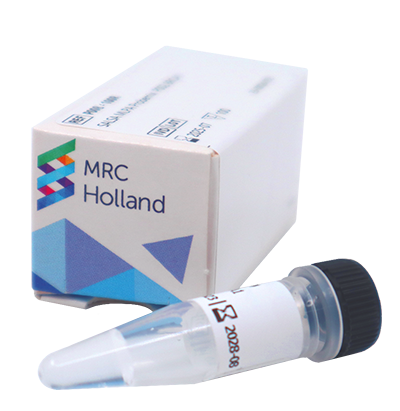
SALSA MLPA Probemix P047 RB1 detects copy number variations in the RB1 gene. This product may also be used for methylation analysis of the RB1 promoter and imprinted locus.
Contents: 57 MLPA probes, including 35 probes for the RB1 region, of which 8 provide information on the methylation status of the RB1 promoter region (CpG106) and the imprinted CpG island in RB1 intron 2 (CpG85).
Tissue: human genomic DNA, including DNA from FFPE tissue.
Application: Research on retinoblastoma (RB).
For research use only (RUO). Not for use in diagnostics.
This product may also be used for methylation analysis of the RB1 promoter and imprinted locus in combination with the MS-MLPA General Protocol.
SALSA MLPA Probemix P047 RB1 is a research use only (RUO) assay for the detection of deletions or duplications in the RB1 gene and of methylation status of the RB1 gene promoter and imprinted locus in a DNA sample.
Retinoblastoma (RB; OMIM180200) is an embryonic neoplasm of retinal origin developing in early childhood and often bilaterally. The incidence of RB is estimated between 1:15000 and 1:20000 live births (Moll et al. 1997, Seregard et al. 2004). Retinoblastomas occur in two forms: hereditary and non-hereditary (sporadic), representing about 40 and 60% of all RB cases, respectively. In hereditary RB, germline mutations causing RB1 gene loss or inactivation are inherited in autosomal dominant pattern and predispose to RB development with high penetrance. Over 80% of hereditary RB is caused by de novo RB1 mutations arising during embryonic development. Bilateral and unilateral hereditary RB represent about 25-30% and 10-15% of all RB cases, respectively. None of the sporadic RBs is bilateral. Bilateral RB patients also have a predisposition for secondary cancers with the highest risk for osteosarcomas. In about 1.5% of unilateral RB cases somatic MYCN amplification (but no RB1 pathogenic variants) was detected (Rushlow et al. 2013).
The RB1 gene (27 exons) located on 13q14.2 spans about 180 kb of genomic DNA and is a well characterized tumour suppressor gene encoding a ubiquitously expressed nuclear protein involved in cell cycle regulation, cellular differentiation and survival. Point mutations, small and large deletions, as well as promoter methylation in the RB1 gene affect the function of retinoblastoma-associated protein (pRB). Over 500 pathogenic germline variants were identified in the RB1 gene (https://databases.lovd.nl/shared/variants/RB1/). Moreover, additional clinical features were described for deletions at 13q14 encompassing the RB1 gene (Mitter et al. 2011), such as RB1 gene deletions spanning to the PCDH8 gene have been shown to play an important role in psychomotor delay in RB patients (Castera et al. 2013, Mitter et al. 2011). Contiguous loss of MED4, which is located centromeric to RB1 is thought to contribute to synthetic lethality in cells with RB1 homozygous loss (Dehainault et al. 2014).
pRB loss, predominantly via heterozygous deletion of RB1 gene, is also a common abnormality for various cancer types, including breast cancer, lung cancer, prostate cancer and osteosarcoma, and is often associated with poor survival (reviewed in Mandigo et al. 2021).
RB1 inactivation by methylation of promoter region (CpG106) has been shown in 8-15% RB (Dommering et al. 2014, Greger et al. 1989, Price et al. 2014) and in other cancers (Sahi et al. 2014, Simpson et al. 2000, Nakamura et al. 2001). Moreover, an imprinted locus in intron 2 of the RB1 gene (CpG85) – methylated at the maternal allele, has been identified (Kanber et al. 2009), and recently the importance of the methylation of this imprinted locus in hepatocellular carcinoma has been shown (Anwar et al. 2014).
More information is available at https://www.ncbi.nlm.nih.gov/books/NBK1452/.
SALSA MLPA Probemix P047 RB1 is for research use only (RUO) in all territories.
A general SALSA MLPA Reagent Kit is required for MLPA experiments (to be ordered separately).
The prices above are list prices for direct orders from MRC Holland. Contact us for a quote that takes discounts and additional costs (such as shipping costs) into account. Different prices apply for orders through one of our sales partners; contact your local supplier for a quote.
Inclusion of a positive sample is usually not required, but can be useful for the analysis of your experiments. MRC Holland has very limited access to positive samples and cannot supply such samples. We recommend using positive samples from your own collection. Alternatively, you can use positive samples from an online biorepository, such as the Coriell Institute.
See this support article for commercially available positive samples that can be used with this product.