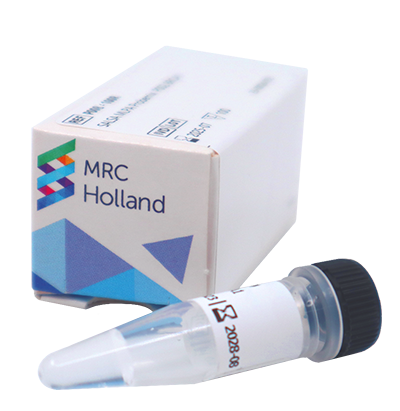
Alveolar Capillary Dysplasia with misalignment of pulmonary veins (ACD/MPV) is a rare, neonatal and lethal development disorder of the lungs. In patients with ACD/MPV, Stankiewicz et al. identified four different heterozygous mutations in the candidate FOXF1 gene and overlapping micro-deletions encompassing the FOX transcription factor gene cluster on chromosome 16q24.1.
(Stankiewicz P et al. 2009, Am J Hum Genet. 84:780-91).
Feingold syndrome (FS) is a rare autosomal dominant inherited condition that is characterised by microcephaly, limb malformations, esophageal atresia, and other malformations. Defects (haploinsufficiency, mutations, (micro)deletions) in the MYCN proto-oncogene on chromosome 2p24.3 is the main cause of FS. The MYCN gene is a member of the MYC family and encodes the transcriptional regulator N-myc regulating many target genes involved in the cell cycle.
The MYCN gene (3 exons) spans ~6.4 kb of genomic DNA and is located on 2p24.3, 15.9 Mb from the p-telomere. The P431-A1 probemix contains two probes for exon 1 and 3, and one probe for exon 2.
The FOXF1 gene (2 exons) spans ~4.9 kb of genomic DNA and is located on 16q24.1, 86.5 Mb from the p-telomere. The P431-A1 probemix contains two probes for each exon of the gene and two probes upstream of the FOXF1 gene. This probemix furthermore contains ten probes for the shared deletion region (SDR) of 75 kb, located 257 kb upstream of the FOXF1 gene, including four probes for the regulatory fragment 1a (RF1a) of 1505 bp within the SDR (Szafranski P et al. 2013, Genome Res. 23:23-33).
The FOXC2 gene (1 exon) spans ~2.7 kb of genomic DNA and is located on 16q24.1, 86.6 Mb from the p-telomere. The P431-A1 probemix contains two probes for exon 1.
The FOXL1 gene (1 exon) spans ~2.6 kb of genomic DNA and is located on 16q24.1, 86.6 Mb from the p-telomere. The P431-A1 probemix contains three probes for exon 1.
In addition, 13 reference probes are included in this probemix, detecting several different autosomal chromosomal locations.
This SALSA MLPA probemix is designed to detect deletions/duplications of one or more sequences in the aforementioned gene(s) in a DNA sample. Heterozygous deletions of recognition sequences should give a 35-50% reduced relative peak height of the amplification product of that probe. Note that a mutation or polymorphism in the sequence detected by a probe can also cause a reduction in relative peak height, even when not located exactly on the ligation site! In addition, some probe signals are more sensitive to sample purity and small changes in experimental conditions. Therefore, deletions and duplications detected by MLPA should always be confirmed by other methods. Not all deletions and duplications detected by MLPA will be pathogenic; users should always verify the latest scientific literature when interpreting their findings. We have no information on what percentage of defects in these genes is caused by deletions/duplications of complete exons. Finally, note that most defects in this gene are expected to be small (point) mutations which will not be detected by this SALSA MLPA test.