Choose your country to see the products for your location

P248 MLH1-MSH2 Confirmation
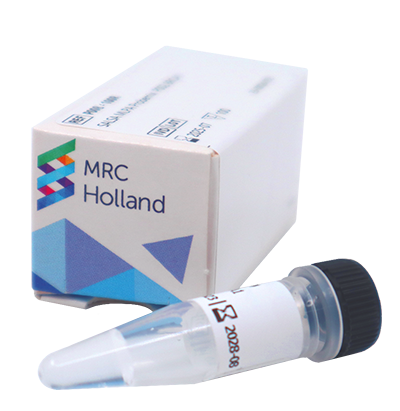
SALSA MLPA probemix P248 MLH1-MSH2 Confirmation detects copy number variations in the MLH1 and MSH2 genes.

Specifications

Contents: 49 MLPA probes, including 21 probes for MLH1, 17 probes for MSH2 and 1 probe downstream of MSH2.

Tissue: genomic DNA isolated from human peripheral whole blood.

Application: Lynch syndrome (LS).

IVDR certified for in vitro diagnostic (IVD) use.

Intended to confirm copy number variation of MLH1 and MSH2 detected with P003 MLH1/MSH2.
This product has recently been CE-marked for in vitro diagnostic (IVD) use under the In Vitro Diagnostic Regulation (IVDR; EU 2017/746), which replaces the former CE-marking under the IVD Directive (IVDD; Directive 98/79/EC). This update was accompanied by a change in the intended purpose and a change in format of the product description. Some information can now be found in a different location (more information).

Intended purpose

The SALSA MLPA Probemix P248 MLH1-MSH2 Confirmation is an in vitro diagnostic (IVD) semi-quantitative manual assay for the detection of deletions or duplications in the MLH1 and MSH2 genes in genomic DNA isolated from human peripheral whole blood specimens. P248 MLH1-MSH2 Confirmation is intended to confirm a potential cause for and clinical diagnosis of Lynch syndrome, and to confirm results initially detected using the SALSA MLPA Probemix P003 MLH1/MSH2. P248 MLH1-MSH2 Confirmation cannot be used to verify deletions in exon 9 of the EPCAM gene or the recurrent 10 Mb inversion on chromosome arm 2p detected by P003 MLH1/MSH2.

For the full intended purpose, see the product description.

Clinical background

Lynch syndrome (LS), sometimes also referred to as hereditary non-polyposis colorectal cancer (HNPCC, encompassing LS and all other forms of MMR-deficient and MMR-proficient hereditary nonpolyposis colorectal cancer), is a hereditary cancer susceptibility syndrome, predisposing to several cancer types (GeneReviews). It is an autosomal dominantly inherited syndrome with gene-dependent, age-related penetrance. Prevalence of LS in the general population can be estimated at 1:280 (Evans et al. 2021). LS accounts for ~3% of all colorectal cancer cases (Moreira et al. 2012; Jiang et al. 2019; Dong et al. 2020), ~3% of endometrial cancer cases (Kahn et al. 2019) and ~10-15% of hereditary ovarian cancers (Nakamura et al. 2014).

LS is caused by heterozygous germline variants in DNA mismatch repair (MMR) genes, including MLH1, MSH2, MSH6, and PMS2 (GeneReviews). Tumours exhibit MMR deficiency, which is the consequence of somatic inactivation of the second allele of the affected gene and leads to instability of microsatellite sequences in the tumour genome.

Nonsense, missense, frameshift and splicing variants, small deletions and insertions, as well as deletions or duplications of one or more exons, are responsible for loss of function of the inherited, predisposing MMR allele. Most pathogenic variants are reported in MLH1 (15-40%) and MSH2 (20-40%); germline mutations in MSH6 (12-35%) and PMS2 (5-25%) are slightly less common (GeneReviews).

Large genomic rearrangements in these MMR genes occur with varying frequencies (20-40% of pathogenic variants in MSH2, 10-20% of pathogenic variants in MLH1, 0-10% of pathogenic variants in MSH6, 20-55% of pathogenic variants in PMS2) depending on the population studied.

Regulatory status

SALSA MLPA Probemix P248 MLH1-MSH2 Confirmation is CE-marked under the IVDR for in vitro diagnostic (IVD) use in Europe.

This assay is for research use only (RUO) in all other territories.

Product documentation

Translations and Summary of Safety and Performance

Translations of the product description in selected European languages are available upon request. Please contact us or one of our local sales partners. Translations of the MLPA General Protocol in selected languages are available here.

The Summary of Safety and Performance (SSP) is also available upon request.

List prices

Product

Item no.
Description
Technology
Price
P248-025R
SALSA MLPA Probemix P248 MLH1-MSH2 Confirmation – 25 rxn
€ 286.00
P248-050R
SALSA MLPA Probemix P248 MLH1-MSH2 Confirmation – 50 rxn
€ 560.00
P248-100R
SALSA MLPA Probemix P248 MLH1-MSH2 Confirmation – 100 rxn
€ 1096.00

Required reagents

A general SALSA MLPA Reagent Kit is required for MLPA experiments (to be ordered separately).

Item no.
Description
Technology
Price
EK1-FAM
SALSA MLPA Reagent Kit – 100 rxn – FAM (6 vials)
€ 348.00
EK1-CY5
SALSA MLPA Reagent Kit – 100 rxn – Cy5 (6 vials)
€ 348.00
EK5-FAM
SALSA MLPA Reagent Kit – 500 rxn – FAM (5×6 vials)
€ 1600.00
EK5-CY5
SALSA MLPA Reagent Kit – 500 rxn – Cy5 (5×6 vials)
€ 1600.00
EK20-FAM
SALSA MLPA Reagent Kit – 2000 rxn – FAM (5×6 vials)
€ 6152.00

Price details & ordering

The prices above are list prices for direct orders from MRC Holland. Contact us for a quote that takes discounts and additional costs (such as shipping costs) into account. Different prices apply for orders through one of our sales partners; contact your local supplier for a quote.

Positive samples

Inclusion of a positive sample is usually not required, but can be useful for the analysis of your experiments. MRC Holland has very limited access to positive samples and cannot supply such samples. We recommend using positive samples from your own collection. Alternatively, you can use positive samples from an online biorepository, such as the Coriell Institute.

We have no information about specific commercially available positive samples that can be used with this product.

Comparison of Lynch syndrome and polyposis syndrome products

MRC Holland offers various different assays for Lynch syndrome and polyposis syndrome. The table below indicates which product can be used for which target gene(s).

Currently Viewing Currently Viewing Currently Viewing Currently Viewing Currently Viewing Currently Viewing Currently Viewing Currently Viewing
D001/D002 P003 P248 P008 P072 ME011 P043 P378
Properties CE-marked no yes yes yes yes yes yes yes
Technique digitalMLPA MLPA MLPA MLPA MLPA MS-MLPA MLPA MLPA
Lynch syndrome (HNPCC) MLH1
MSH2
MSH6
PMS2
EPCAM
Polyposis syndrome FAP/AFAP: APC
MAP: MUTYH
Product page D001/D002 P003 P248 P008 P072 ME011 P043 P378

Publications

Selected publications using P248 MLH1-MSH2 Confirmation

  • Alonso-Espinaco V et al. (2011). Novel MLH1 duplication identified in Colombian families with Lynch syndrome. Genet Med. 13:155-60.
  • Bashyam MD et al. (2015). Evidence for presence of mismatch repair gene expression positive Lynch syndrome cases in India. Mol Carcinog. 54:1807-14.
  • Egoavil C et al. (2013). Prevalence of Lynch syndrome among patients with newly diagnosed endometrial cancers. PLoS One. 8:e79737.
  • Guarinos C et al. (2010). EPCAM germ line deletions as causes of Lynch syndrome in Spanish patients. J Mol Diagn. 12:765-70.
  • Magnani G et al. (2015). Molecular Features and Methylation Status in Early Onset (=40 Years) Colorectal Cancer: A Population Based, Case-Control Study. Gastroenterol Res Pract. 2015:132190.
  • Malesci A et al. (2014). Molecular heterogeneity and prognostic implications of synchronous advanced colorectal neoplasia. Br J Cancer. 110:1228-35.
  • Moir-Meyer GL et al. (2015). Rare germline copy number deletions of likely functional importance are implicated in endometrial cancer predisposition. Hum Genet. 134:269-78.
  • Schofield L et al. (2009). Population-based detection of Lynch syndrome in young colorectal cancer patients using microsatellite instability as the initial test. Int J Cancer. 124:1097-102.
  • Ziada-Bouchaar H et al. (2017). First description of mutational analysis of MLH1, MSH2 and MSH6 in Algerian families with suspected Lynch syndrome. Fam Cancer. 16:57-66.

References

  • Dong L et al. (2020). Distinct clinical phenotype and genetic testing strategy for Lynch syndrome in China based on a large colorectal cancer cohort. Int J Cancer. 146:3077-86.
  • Evans DG et al. (2022). Advances in genetic technologies result in improved diagnosis of mismatch repair deficiency in colorectal and endometrial cancers. J Med Genet. 59:328-34.
  • Jiang W. et al. (2019). Universal screening for Lynch syndrome in a large consecutive cohort of Chinese colorectal cancer patients: High prevalence and unique molecular features. Int J Cancer. 144:2161-8.
  • Kahn RM et al. (2019). Universal endometrial cancer tumor typing: How much has immunohistochemistry, microsatellite instability, and MLH1 methylation improved the diagnosis of Lynch syndrome across the population? Cancer. 125:3172-83.
  • Moreira L et al. (2012). Identification of Lynch syndrome among patients with colorectal cancer. JAMA. 308:1555-65.
  • Nakamura K et al. (2014). Features of ovarian cancer in Lynch syndrome (Review). Mol Clin Oncol. 2:909-16.

Sign in

Don't have an account? Create one

Forgot password?

Select Your Country

Choose your country to see the products for your location

CE

CE-marked products are for In Vitro Diagnostic (IVD) use only in EU (candidate) member states and members of the European Free Trade Association (EFTA), and the UK.

CE2797

CE-marked products are for In Vitro Diagnostic (IVD) use only in EU (candidate) member states and members of the European Free Trade Association (EFTA), and the UK.