SALSA MLPA Probemix P411 Porphyria mix 1 detects copy number variations in the ALAD, HMBS and PPOX genes.
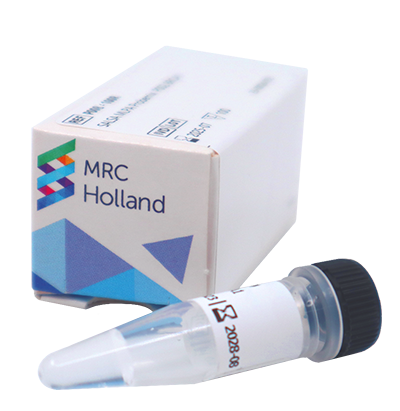
Contents: 46 MLPA probes, including 10 probes for ALAD, 14 probes for HMBS (covering all exons of the transcript variant NM_000190.4), and 13 probes for PPOX (covering all exons).
Tissue: human genomic DNA.
Application: research on acute hepatic porphyria.
For research use only (RUO). Not for use in diagnostics.
The SALSA MLPA Probemix P411 Porphyria mix 1 is a research use only (RUO) assay for the detection of deletions or duplications in the ALAD, HMBS and PPOX genes, which are associated with acute hepatic porphyria. The CPOX gene, which is also associated with acute hepatic porphyria, is included in the P412 Porphyria mix 2.
Porphyrias are a group of disorders characterised by accumulation of porphyrins and porphyrin precursors owing to enzymatic deficiencies of the haem biosynthetic pathway. They can be divided into acute hepatic porphyrias and erythropoietic porphyrias based on their clinical manifestations. Acute hepatic porphyrias are characterised by abdominal pain, neuropsychiatric symptoms and neuropathy. Erythropoietic porphyrias do not cause neurologic symptoms, but are associated with photosensitive dermatologic eruptions and may be associated with additional hepatic injury and/or haemolysis (Simon & Herkes, 2011).
Acute hepatic porphyrias consist of ALA dehydratase deficiency porphyria (ADP), acute intermittent porphyria (AIP), hereditary coproporphyria (HCP) and variegate porphyria (VP). Erythropoietic porphyrias comprise congenital erythropoietic porphyria (CEP), porphyria cutanea tarda (PCT) and the related hepatoerythropoietic porphyria and erythropoietic protoporphyria (EPP); see Table 1.
| Porphyria | Enzyme | Inheritance | Classification | Clinical features |
|---|---|---|---|---|
| ADP | ALAD$ | AR | Acute hepatic | Acute neurovisceral |
| AIP | HMBS$ | AD | Acute hepatic | Acute neurovisceral |
| CEP | UROS | AR | Erythropoietic | Photosensitivity; Liver disease; Haemolytic anaemia |
| PCT | UROD | Sporadic 80%, AD 20% | Erythropoietic | Photosensitivity; Liver disease |
| HCP | CPOX | AD | Acute hepatic | Acute neurovisceral (100%); Photosensitivity (20%) |
| VP | PPOX$ | AD | Acute hepatic | Acute neurovisceral (50%); Photosensitivity (80%) |
| EPP | FECH | AD | Erythropoietic | Photosensitivity; Liver disease |
AD = autosomal dominant, AR = autosomal recessive, ADP = ALA dehydratase deficiency porphyria, AIP = acute intermittent porphyria, ALAD = ALA dehydratase, CEP = congenital erythropoietic porphyria, CPOX = coproporphyrinogen oxidase, EPP = erythropoietic protoporphyria, FECH = ferrochetalase, HCP = hereditary coproporphyria, HMBS = hydroxymethylbillane synthase, PCT = porphyria cutanea tarda, PPOX = protoporphyrinogen oxidase, UROD = uroporphyrinogen dehydratase, UROS = uroporphyrinogen synthase, VP = variegate porphyria.
$ ALAD, HMBS and PPOX genes are included in SALSA MLPA probemix P411.
The ALAD gene (12 exons), spans ~15 kb of genomic DNA and is located on 9q32, 115 Mb from the p-telomere.
The HMBS gene (15 exons), spans ~8.7 kb of genomic DNA and is located on 11q23.3, 118 Mb from the p-telomere.
The PPOX gene, (13 exons) spans ~4.8 kb of genomic DNA and is located on 1q23.3, 159 Mb from the p-telomere.
More information is available at:
SALSA MLPA Probemix P411 Porphyria mix 1 is for research use only (RUO) in all territories.
A general SALSA MLPA Reagent Kit is required for MLPA experiments (to be ordered separately).
The prices above are list prices for direct orders from MRC Holland. Contact us for a quote that takes discounts and additional costs (such as shipping costs) into account. Different prices apply for orders through one of our sales partners; contact your local supplier for a quote.
Inclusion of a positive sample is usually not required, but can be useful for the analysis of your experiments. MRC Holland has very limited access to positive samples and cannot supply such samples. We recommend using positive samples from your own collection. Alternatively, you can use positive samples from an online biorepository, such as the Coriell Institute.
The commercially available positive samples below can be used with the current (B3) version of this product.