Choose your country to see the products for your location

P369 Smith-Magenis

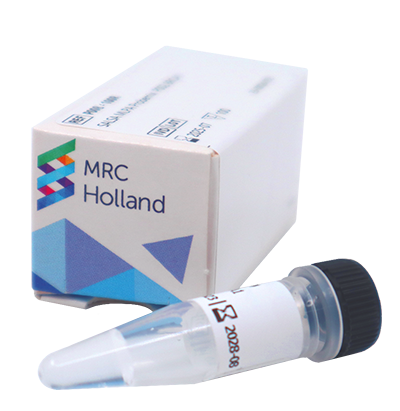
SALSA MLPA Probemix P369 Smith-Magenis detects copy number variations in the 17q11.2 region.

Specifications

Contents: 47 MLPA probes, including 29 probes for 17p11.2 region (of which 10 probes are for RAI1), and 5 probes for 2q37.

Tissue: human genomic DNA.

Application: research on Smith-Magenis syndrome (SMS) and Potocki-Lupski syndrome (PTLS).

For research use only (RUO). Not for use in diagnostics.
General information

SALSA MLPA Probemix P369 Smith-Magenis is a research use only (RUO) assay for detection of deletions or duplications in the 17p11.2 chromosomal region. Deletion of this region is associated with Smith-Magenis syndrome (SMS), whereas duplication of this region is associated with Potocki-Lupski syndrome (PTLS). SMS is a developmental disorder characterised by craniofacial anomalies, and several neurological and behavioural abnormalities. It is primarily caused by an interstitial deletion on chromosome 17p11.2 where the gene RAI1, included in this probemix, is located. In most cases (~70%), SMS is due to a ~3.7 Mb deletion, but atypical (smaller or larger) deletions, as well as RAI1 mutations have also been found in patients (Elsea & Girirajan 2008).

Haploinsufficiency of RAI1 is therefore thought to play a major role in the SMS phenotype (Elsea & Girirajan 2008). Other genes located in the 17p11.2 critical region that have also been implicated to play a role in some SMS features, namely MY015A (deafness), TNFRSF13B (immune deficiency), PEMT (fatty liver), and ALDH3A2 (dry skin), as well as PMP22 (neuropathy development) which is flanking this region, are also covered (Vilboux et al. 2011 and Poisson et al. 2019).

Furthermore, five probes targeting the 2q37.3 region are included, among which probes targeting the HDAC4 gene. Haploinsufficiency (either by a mutation or deletion) of the HDAC4 gene causes chromosome 2q37 deletion syndrome, which has an overlapping phenotype with SMS. Furthermore, deletion or mutation of the HDAC4 gene results in reduced expression of RAI1 (Williams et al. 2010, Trang et al. 2019).

Duplication of the same ~3.7 Mb region is associated with PTLS, which shows some phenotypical overlap with SMS, yet the clinical features of each syndrome are somewhat distinct. As in SMS, size of the duplication can vary between patients. The prevalence for SMS and PTLS is approximately 1 in 25,000 (Neira-Fresneda & Potocki 2015).

More information is available at: https://www.ncbi.nlm.nih.gov/books/NBK1310/ (SMS) and https://www.ncbi.nlm.nih.gov/books/NBK447920/ (PTLS).

Regulatory status

SALSA MLPA Probemix P369 Smith-Magenis is for research use only (RUO) in all territories.

List prices

Product

Item no.
Description
Technology
Price
P369-025R
SALSA MLPA Probemix P369 Smith-Magenis – 25 rxn
€ 296.00
P369-050R
SALSA MLPA Probemix P369 Smith-Magenis – 50 rxn
€ 580.00
P369-100R
SALSA MLPA Probemix P369 Smith-Magenis – 100 rxn
€ 1135.00

Required reagents

A general SALSA MLPA Reagent Kit is required for MLPA experiments (to be ordered separately).

Item no.
Description
Technology
Price
EK1-FAM
SALSA MLPA Reagent Kit – 100 rxn – FAM (6 vials)
€ 361.00
EK1-CY5
SALSA MLPA Reagent Kit – 100 rxn – Cy5 (6 vials)
€ 361.00
EK5-FAM
SALSA MLPA Reagent Kit – 500 rxn – FAM (5×6 vials)
€ 1658.00
EK5-CY5
SALSA MLPA Reagent Kit – 500 rxn – Cy5 (5×6 vials)
€ 1658.00
EK20-FAM
SALSA MLPA Reagent Kit – 2000 rxn – FAM (5×6 vials)
€ 6373.00

Price details & ordering

The prices above are list prices for direct orders from MRC Holland. Contact us for a quote that takes discounts and additional costs (such as shipping costs) into account. Different prices apply for orders through one of our sales partners; contact your local supplier for a quote.

Positive samples

Inclusion of a positive sample is usually not required, but can be useful for the analysis of your experiments. MRC Holland has very limited access to positive samples and cannot supply such samples. We recommend using positive samples from your own collection. Alternatively, you can use positive samples from an online biorepository, such as the Coriell Institute.

See this support article for commercially available positive samples that can be used with this product.

Sign in

Don't have an account? Create one

Forgot password?

Select Your Country

Choose your country to see the products for your location