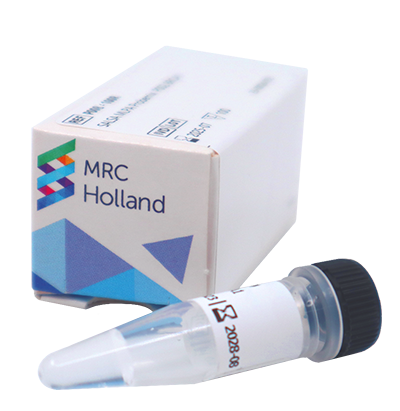
SALSA MLPA Probemix P341 PKHD1 mix 1 and P342 PKHD1 mix 2 detect copy number variations in the PKHD1 gene.
Contents: P341 PKHD1 mix 1 and P342 PKHD1 mix 2 together contain 88 MLPA probes, including 70 probes for PKHD1.
Tissue: human genomic DNA.
Application: research on autosomal recessive polycystic kidney disease (ARPKD).
For research use only (RUO). Not for use in diagnostics.
The SALSA MLPA Probemix P341/P342 PKHD1 is a research use only (RUO) assay for the detection of deletions or duplications in the PKHD1 gene, which is associated with autosomal recessive polycystic kidney disease (ARPKD).
ARPKD is a hereditary and severe form of polycystic kidney disease, affecting the kidneys and the hepatic biliary tract. The clinical spectrum is widely variable, with most cases presenting during infancy. The fetal phenotypic features classically include enlarged and echogenic kidneys, as well as oligohydramnios secondary to a poor urine output. Up to 50% of the affected neonates die shortly after birth, as a result of severe pulmonary hypoplasia and secondary respiratory insufficiency. In the subset that survives the perinatal period, morbidity and mortality are mainly related to severe systemic hypertension, renal insufficiency, and portal hypertension due to portal-tract fibrosis. Defects in the PKHD1 gene are the cause of all typical forms of ARPKD.
More information is available at https://www.ncbi.nlm.nih.gov/books/NBK1326/.
SALSA MLPA Probemix P341 PKHD1 mix 1 is for research use only (RUO) in all territories.
A general SALSA MLPA Reagent Kit is required for MLPA experiments (to be ordered separately).
The prices above are list prices for direct orders from MRC Holland. Contact us for a quote that takes discounts and additional costs (such as shipping costs) into account. Different prices apply for orders through one of our sales partners; contact your local supplier for a quote.
Inclusion of a positive sample is usually not required, but can be useful for the analysis of your experiments. MRC Holland has very limited access to positive samples and cannot supply such samples. We recommend using positive samples from your own collection. Alternatively, you can use positive samples from an online biorepository, such as the Coriell Institute.
We have no information about specific commercially available positive samples that can be used with this product.