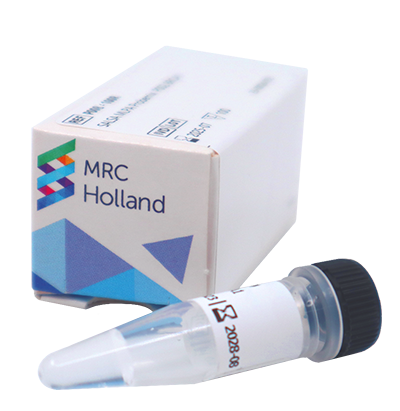
SALSA MLPA Probemix P106 X-linked ID detects copy number variations in several genes on the X-chromosome associated with X-linked intellectual disability.
Contents: 46 MLPA probes for 16 genes on the X-chromosome: RPS6KA3, ARX, IL1RAPL1, TSPAN7, PQBP1, HUWE1, OPHN1, ACSL4, PAK3, DCX, AGTR2, ARHGEF6, FMR1, AFF2, SLC6A8, and GDI1.
Tissue: human genomic DNA.
Application: research on X-linked intellectual disability (XLID).
For research use only (RUO). Not for use in diagnostics.
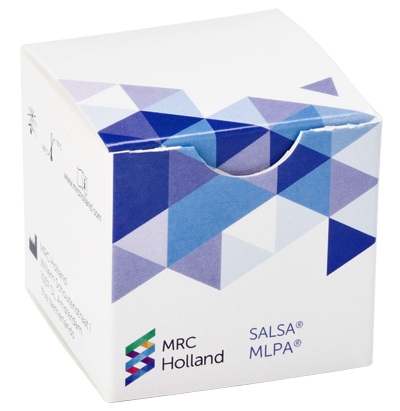
The SALSA MLPA Probemix P106 X-linked ID is a research use only (RUO) assay for the detection of deletions or duplications in several genes on the X-chromosome, which are associated with X-linked intellectual disability (XLID).
Intellectual disability (ID) is estimated to occur in about 2-3% of the population and 12% of all ID is thought to be XLID (Utine et al. 2011). Among intellectually disabled patients, an excess of males over females has long been noted, which is usually explained by the presence of many genes responsible for ID on the X chromosome (Ropers et al. 2005).
XLID is usually divided into a syndromic and a non-syndromic form. In syndromic forms (S-XLID), ID is present in association with a specific pattern of physical, neurological, and/or metabolic abnormalities. The term non-specific or non-syndromic XLID (NS-XLID) was introduced to indicate a condition segregating in an X-linked manner in which male patients have no consistent phenotypic manifestations other than ID. Many different genes responsible for both forms of XLID have been identified (Ropers et al. 2005).
SALSA MLPA Probemix P106 X-linked ID is for research use only (RUO) in all territories.
A general SALSA MLPA Reagent Kit is required for MLPA experiments (to be ordered separately).
The prices above are list prices for direct orders from MRC Holland. Contact us for a quote that takes discounts and additional costs (such as shipping costs) into account. Different prices apply for orders through one of our sales partners; contact your local supplier for a quote.
Inclusion of a positive sample is usually not required, but can be useful for the analysis of your experiments. MRC Holland has very limited access to positive samples and cannot supply such samples. We recommend using positive samples from your own collection. Alternatively, you can use positive samples from an online biorepository, such as the Coriell Institute.
We have no information about specific commercially available positive samples that can be used with this product.