Choose your country to see the products for your location

P499 EPCAM

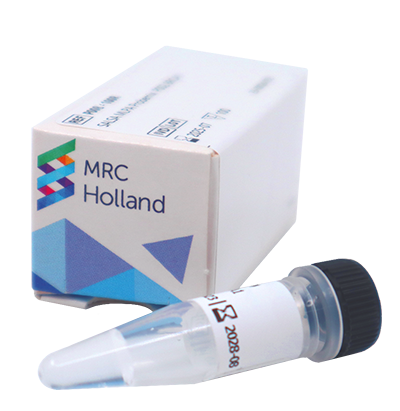
SALSA MLPA Probemix P499 detects copy number variation in the EPCAM gene and the intergenic region between EPCAM and MSH2.

Specifications

Contents: 32 MLPA probes, including 11 probes for EPCAM, 4 probes for MSH2 and 7 probes for the intergenic region between EPCAM and MSH2.

Tissue: human genomic DNA.

Application: research on Lynch syndrome and Congenital tufting enteropathy.

For research use only (RUO). Not for use in diagnostics.
General information

The SALSA MLPA Probemix P499 EPCAM is a research use only (RUO) assay for the detection of deletions or duplications in the region containing the EPCAM gene and the first two exons of the MSH2 gene, which is associated with Lynch syndrome (end of EPCAM and MSH2) and congenital tufting enteropathy (EPCAM).

Lynch syndrome, formerly known as hereditary non-polyposis colorectal cancer (HNPCC), is an adult-onset hereditary cancer susceptibility syndrome predisposing to several cancer types, the most prevalent being colorectal cancer, endometrial cancer, ovarian cancer, gastric cancer and small bowel cancer. It is a dominantly inherited syndrome caused by heterozygous germline mutations in one of the four major DNA mismatch repair genes: MLH1, MSH2, MSH6 or PMS2. Another cause of Lynch syndrome is a deletion of the 3' part of EPCAM, leading to constitutional epigenetic silencing of the downstream MSH2 gene (Lynch et al. 2015). Disruption of the last exon of EPCAM (exon 9) can lead to methylation of the adjacent MSH2 promoter and inactivation of MSH2 (Ligtenberg et al. 2009, Kovacs et al. 2009). The estimated contribution to Lynch syndrome is 20-40% for MSH2 and <10% for EPCAM.

Congenital tufting enteropathy (CTE) is an autosomal recessive disorder caused by pathogenic variants in EPCAM. The estimated incidence is 1 in 50,000-100,000 live births. Symptoms are intractable diarrhoea, malnutrition, and growth failure in early infancy (Zhao et al. 2026).

The EPCAM gene (9 exons) spans ~18 kb of genomic DNA. The intergenic region between EPCAM and MSH2 spans ~16 kb. The MSH2 gene (16 exons) spans ~80 kb of genomic DNA. Both genes are located on 2p21, ~47 Mb from the p-telomere.

Regulatory status

SALSA MLPA Probemix P499 EPCAM is for research use only (RUO) in all territories.

List prices

Product

Item no.
Description
Technology
Price
P499-025R
SALSA MLPA Probemix P499 EPCAM – 25 rxn
€ 296.00
P499-050R
SALSA MLPA Probemix P499 EPCAM – 50 rxn
€ 580.00
P499-100R
SALSA MLPA Probemix P499 EPCAM – 100 rxn
€ 1135.00

Required reagents

A general SALSA MLPA Reagent Kit is required for MLPA experiments (to be ordered separately).

Item no.
Description
Technology
Price
EK1-FAM
SALSA MLPA Reagent Kit – 100 rxn – FAM (6 vials)
€ 361.00
EK1-CY5
SALSA MLPA Reagent Kit – 100 rxn – Cy5 (6 vials)
€ 361.00
EK5-FAM
SALSA MLPA Reagent Kit – 500 rxn – FAM (5×6 vials)
€ 1658.00
EK5-CY5
SALSA MLPA Reagent Kit – 500 rxn – Cy5 (5×6 vials)
€ 1658.00
EK20-FAM
SALSA MLPA Reagent Kit – 2000 rxn – FAM (5×6 vials)
€ 6373.00

Price details & ordering

The prices above are list prices for direct orders from MRC Holland. Contact us for a quote that takes discounts and additional costs (such as shipping costs) into account. Different prices apply for orders through one of our sales partners; contact your local supplier for a quote.

Positive samples

Inclusion of a positive sample is usually not required, but can be useful for the analysis of your experiments. MRC Holland has very limited access to positive samples and cannot supply such samples. We recommend using positive samples from your own collection. Alternatively, you can use positive samples from an online biorepository, such as the Coriell Institute.

The commercially available positive samples below can be used with the current (A1) version of this product.

  • Coriell NA07503: Heterozygous duplication affecting the probes for EPCAM and MSH2.
  • Coriell NA10401: Heterozygous duplication affecting the probes for EPCAM and MSH2. The reference probe at 190 nt is also affected by CNA.
  • Coriell NA13451: Heterozygous deletion affecting the probes for EPCAM and MSH2.

Publications

References

  • Kovacs ME et al. (2009). Deletions removing the last exon of TACSTD1 constitute a distinct class of mutations predisposing to Lynch syndrome. Hum Mutat. 30:197-203.
  • Ligtenberg MJL et al. (2009). Heritable somatic methylation and inactivation of MSH2 in families with Lynch syndrome due to deletion of the 3' exons of TACSTD1. Nat Genet. 41:112-7.
  • Lynch HT et al. (2015). Milestones of Lynch syndrome: 1895-2015. Nat Rev Cancer. 15:181-94.
  • Zhao L et al. (2026). Genotype-phenotype correlations in EPCAM-associated congenital tufting enteropathy: a case report and systematic review. Front Pediatr. 14:1830464.

Search

Sign in

Don't have an account? Create one

Forgot password?

Select Your Country

Choose your country to see the products for your location

New Product

First released on Oct 22, 2026